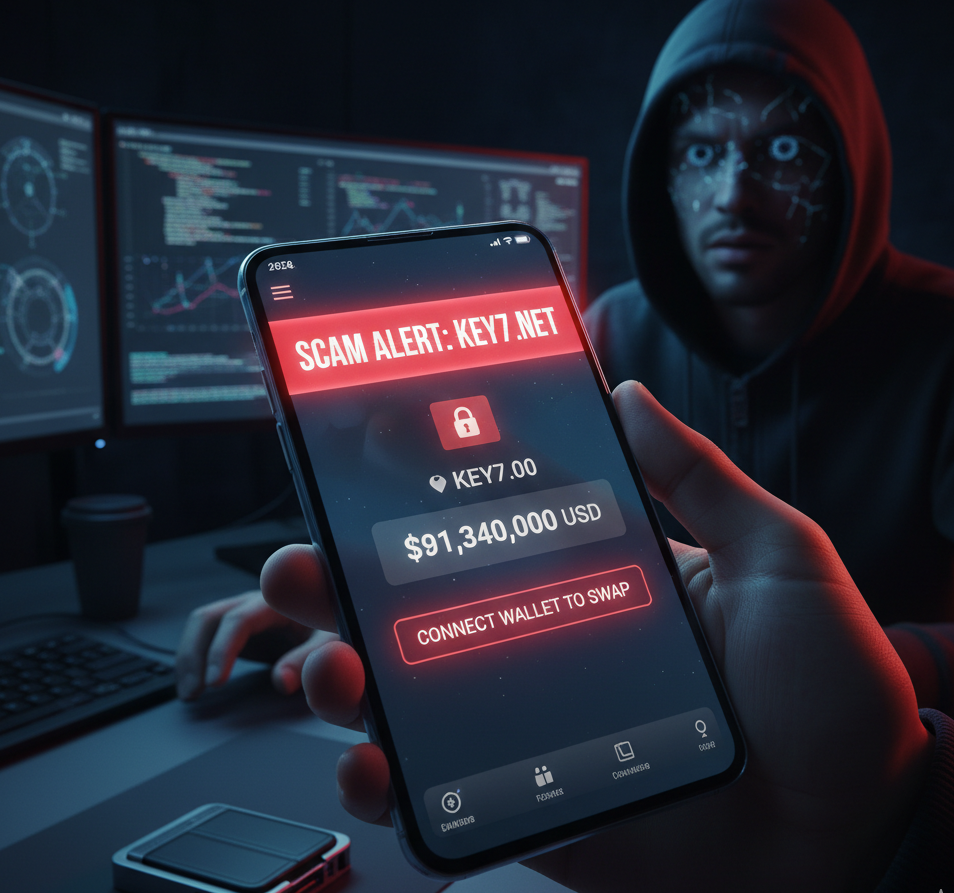
In the fast-evolving world of cryptocurrency, new tokens and projects emerge almost daily, promising innovation, rewards, or easy gains. However, not all are legitimate. One name that has raised concerns among users is key7 net scam. Many crypto holders have reported unexpected appearances of tokens linked to key7.net in their wallets, sparking questions about its legitimacy and potential risks. This article explores the details surrounding key7 net scam, drawing from user reports, scam detection analyses, and broader trends in crypto fraud as observed up to 2026.
Cryptocurrency scams continue to plague the industry, with billions lost annually to sophisticated schemes. Understanding specific cases like this helps investors stay vigilant.
What Is key7.net and How Did It Appear in Wallets?
key7.net appears associated with a token on the Ethereum blockchain, often listed under contract addresses that track holders and transactions. Reports from platforms like Reddit and social media describe users discovering small amounts of a token labeled “key7.net” suddenly appearing in wallets, particularly on Coinbase or similar exchanges.
This phenomenon is not uncommon in crypto. Scammers sometimes “airdrop” tiny amounts of worthless or malicious tokens to thousands of addresses. The goal? To trick recipients into visiting a related website (like key7.net) out of curiosity, where they might connect their wallet and unknowingly approve harmful transactions.
Users have shared experiences like: “A coin called key7.net randomly showed up in my wallet. I read it’s a scam—how do I remove it?” Such unsolicited additions rarely come from legitimate projects and often serve as bait for further exploitation.
Why key7 net scam Concerns Have Persisted
Discussions around key7 net scam date back several years but remain relevant in 2026 due to ongoing crypto vulnerabilities. Scam detection sites, such as Scam Detector, have assigned key7.net a low trust score after evaluating factors like domain age, server details, and user complaints. These evaluations consider over 50 risk indicators, flagging high-risk activity.
Common red flags include:
- Lack of transparent team information or verifiable project details.
- No active development or community presence on major platforms.
- Association with phishing-like tactics where users are lured to connect wallets.
In broader crypto scam trends, wallet drain attacks and dusting scams (sending small tokens to enable larger thefts) have surged. Authorities like the California Department of Financial Protection and Innovation (DFPI) maintain trackers for such fraudulent activities, highlighting how seemingly harmless tokens can lead to major losses.
How key7 net scam Operates: The Typical Mechanism
The pattern linked to key7 net scam follows a well-known playbook in crypto fraud:
- Unsolicited Token Drop — Scammers send micro-amounts to random wallets, making the token visible in apps like Coinbase.
- Curiosity Lure — Recipients search for the token name, often landing on key7.net or similar sites.
- Wallet Connection Trap — The site prompts users to “claim rewards” or “verify” by connecting their wallet, which may request approvals for unlimited spending.
- Asset Drainage — Once approved, funds are transferred out instantly, sometimes worth hundreds of thousands in severe cases.
This mirrors dusting attacks combined with phishing. In 2025 reports, similar schemes have evolved with AI-generated sites and deepfakes, but the core remains social engineering—exploiting curiosity or greed.
Related warnings from communities emphasize: Do not visit the site or interact with the token, as it could compromise your wallet.
Broader Crypto Scam Landscape
Crypto fraud has intensified, with estimates of billions stolen globally. Key trends include:
- Phishing and Wallet Drains — Fake sites mimic legitimate platforms to steal approvals.
- Pig Butchering Schemes — Building trust over time before extracting funds.
- Fake Exchanges and Investments — Platforms promising high returns that vanish.
- Impersonation Scams — Spoofing major exchanges like Binance.
Regulatory bodies worldwide issue alerts, noting that scammers exploit hype around new tokens or airdrops. In this environment, any unsolicited token—especially one tied to low-trust domains—warrants caution.
Additional risks in involve AI-enhanced scams, where personalized messages or fake endorsements trick users more effectively.
Signs That Indicate key7 net scam or Similar Threats
Spotting potential fraud early can save assets. Watch for these indicators:
- Unexpected Wallet Additions — Tokens appear without your participation.
- Urgent Prompts to Act — Sites urging immediate connection or claims.
- Low Trust Scores — From independent validators like Scam Detector.
- No Official Backing — Absence from reputable listings or audits.
- Community Warnings — Consistent reports on forums labeling it risky.
If you’ve encountered key7 net scam elements, avoid interaction and consider revoking any suspicious approvals using tools like revoke.cash.
Steps to Protect Yourself from key7 net scam and Other Frauds
Prevention is key in crypto. Follow these practical steps:
- Never Connect to Unknown Sites — Especially if prompted by unsolicited tokens.
- Use Hardware Wallets — Keep keys offline for major holdings.
- Revoke Permissions Regularly — Check and cancel unnecessary approvals.
- Verify Sources — Research projects through multiple trusted channels.
- Enable Two-Factor Authentication — On exchanges and wallets.
- Report Suspicious Activity — To platforms, authorities, or trackers like DFPI.
Educating yourself on evolving tactics reduces risks significantly.
What to Do If You’ve Been Affected by key7 net scam
If you’ve interacted with key7.net or lost funds:
- Disconnect your wallet immediately from any related sites.
- Change passwords and enable additional security.
- Report to your wallet provider and relevant authorities.
- Seek help from crypto recovery communities (though beware of secondary scams).
- Document everything for potential legal action.
Recovery is challenging due to blockchain’s irreversibility, but quick action limits damage.
Final Thoughts: Staying Safe in a Risky Market
The crypto space offers tremendous potential but attracts fraudsters exploiting trust. Cases like key7 net scam highlight the importance of skepticism toward unsolicited opportunities. By recognizing red flags, using secure practices, and staying informed on trends, you can better protect your investments.
Always prioritize security over curiosity. In cryptocurrency, if something seems too mysterious or convenient, it’s often best to steer clear. Vigilance remains your strongest defense against scams.